
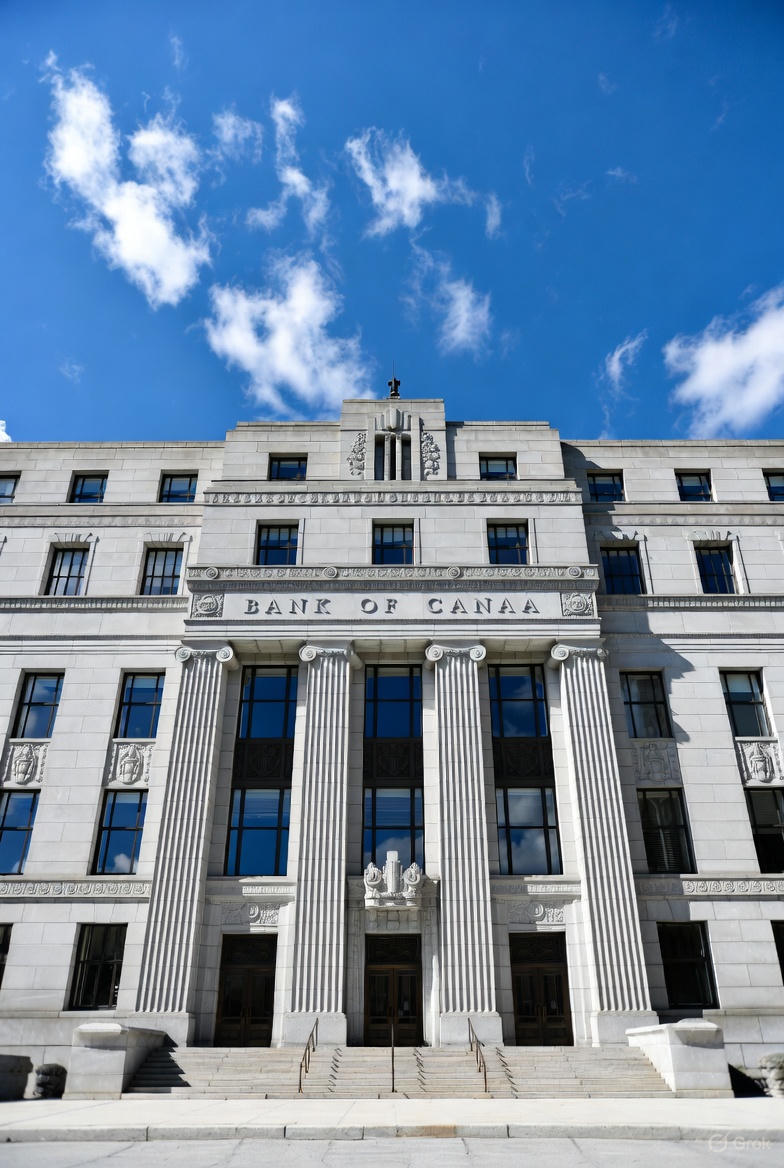
The Bank of Canada is widely expected to hold its benchmark interest rate at 2.75% for the third consecutive meeting, according to economists and financial analysts who are closely watching the central bank’s next move. With inflation remaining stubbornly high and the job market showing renewed strength, policymakers see little urgency to cut rates in the immediate term.
Many economists say the central bank is becoming cautiously optimistic that the worst economic fallout from President Donald Trump’s tariffs may have passed. While concerns initially grew about the possibility of widespread repercussions, the impact of tariffs on steel, aluminum, and automobiles has so far remained mostly contained within those industries. Other sectors have shown notable resilience, helping stabilize broader economic activity.
According to Doug Porter, chief economist at BMO Capital Markets, inflation continues to be a primary concern. “Core inflation is still a bit hotter than the Bank of Canada would like,” Porter noted. He added that recent months have brought economic data that has been “less bad than expected,” suggesting that underlying conditions are holding steadier than previously believed. This makes a continued pause in interest rate changes more probable.
One key factor supporting a hold decision is Canada’s stronger-than-expected job market. The economy added 83,100 jobs in June, marking the first significant employment jump since January. This surge helped push the unemployment rate down to 6.9%, with the most notable gains coming from wholesale and retail trade, manufacturing, healthcare, and social assistance sectors. The improvement in employment reduces the immediate pressure on the Bank of Canada to stimulate growth through rate cuts.
Still, the central bank faces a persistent challenge: core inflation continues to hover at or above 3%, the upper threshold of its 1%–3% target range. As a central bank with a single mandate that prioritizes inflation control, the BoC remains cautious about loosening policy too quickly.
David Doyle, head of economics at Macquarie, emphasized that inflation remains the central bank’s top priority. “The Bank of Canada cares about inflation above all else, and current readings are simply not low enough to justify a cut right now,” he said.
Money markets currently reflect only a 7%–8% probability of a rate cut this week. A Reuters poll of 28 economists echoed this sentiment, with most predicting that the Bank will wait until September to implement the next 25-basis-point rate cut to 2.50%. More than 60% of those surveyed expect a second rate reduction before the year ends.
The Bank of Canada has been the most aggressive rate cutter among G7 central banks, lowering rates by 225 basis points between June of last year and March. Governor Tiff Macklem will announce the latest rate decision at 9:45 a.m. ET (13:45 GMT), along with the central bank’s quarterly Monetary Policy Report.
Earlier this year in April, the Bank presented multiple economic scenarios rather than its usual single forecast, citing uncertainty surrounding tariffs. With conditions gradually stabilizing, economists expect a return to formal projections in the upcoming report.
Although uncertainties remain, the broad consensus is clear: the Bank of Canada is widely expected to hold interest rates steady once again, taking a cautious approach as it balances inflation pressures with evolving economic conditions.
